
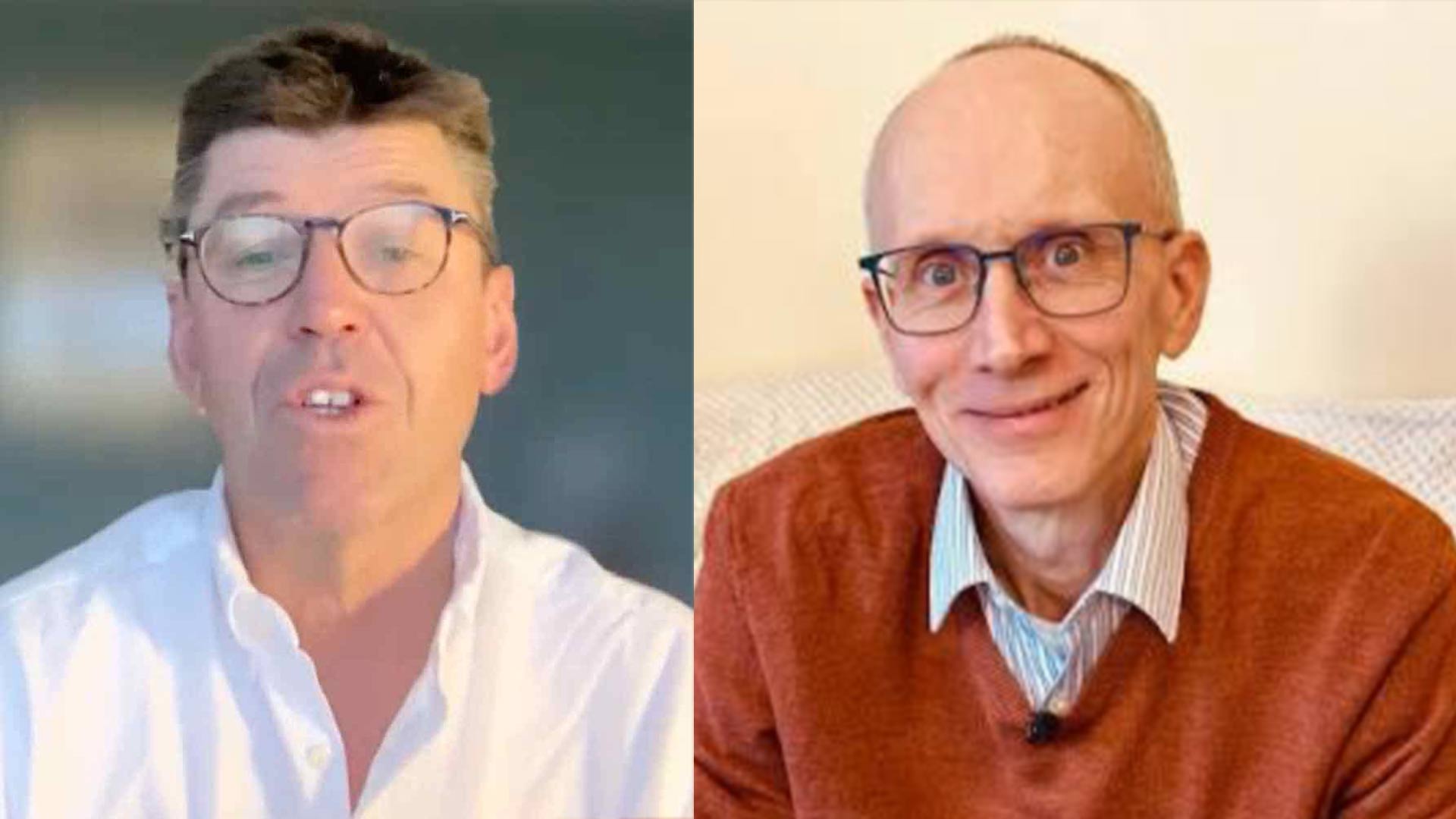
What can senior leaders learn from Russell Taylor about career reinvention?
In this film, Russell talks about:
- His journey from Royal Navy submariner to corporate leader, consultant and executive coach
- Why many of our strongest leadership behaviours are learned early in life
- How the patterns that create success can also hold us back
- The difference between personality and learned behaviour
- Why leaving corporate life can create a loss of identity, structure and belonging
- The importance of understanding who we are beyond our job titles
- How to recognise behaviours that no longer serve us
- The practical questions that can help us make better career decisions
- Why he chose to reinvent his career in his mid-50s
- How to build a new working rhythm when leaving corporate employment
- The importance of being yourself rather than relying on corporate credentials
The patterns behind our success
One of the most interesting ideas Russell explored was that many of the behaviours that help us succeed professionally were developed long before we entered the workplace. Someone who learned to take responsibility early in life might become an exceptional problem-solver. Someone who became sensitive to the feelings of others might develop into a brilliant people leader. Someone who learned to manage independently might become known for resilience and reliability.
Russell explained that these behaviours are not inherently good or bad. They have often served us extremely well, which is why we continue using them. But there can be a hidden cost. The fixer may struggle to delegate or ask for help. The highly sensitive leader may find themselves overthinking situations. The person who always manages alone may find it difficult to let others in. Over time, what was once a strength can also become a burden.
This is particularly relevant for experienced executives because the behaviours that helped us climb the corporate ladder may not be quite as useful when our priorities begin to change.
Why career change is also about identity
Russell has experienced several major career transitions himself, and he was very open about how challenging they were. Leaving the Royal Navy meant losing far more than a job. He was stepping away from a community, a shared purpose, a familiar routine and an identity that had defined him for years. He described similar challenges when leaving corporate leadership to work independently, where even relatively straightforward things such as pricing his services and building his own structure initially felt unfamiliar.
It is a reminder that organisations provide far more than salaries and job titles. They give us relationships, recognition, rhythm and a sense of belonging. When those things disappear, even a successful and experienced leader can find themselves questioning who they are and what they want to do.
For people considering a portfolio career, consultancy, coaching or a different kind of working life, understanding that transition is just as important as deciding which opportunities to pursue.
Who are you beneath your job title?
For me, one of the most powerful moments in the conversation was Russell's challenge to the way we typically approach career decisions. He described coaching a senior executive who had unexpectedly left a major role and was trying to work out what job he should do next. Russell encouraged him to start with something more fundamental: understanding who he was now and what genuinely mattered to him at that stage of his life.
He asked a question that I suspect will resonate with many senior leaders:
"Is my work an expression of who I am or have I become an expression of my work?"
It is easy to spend decades becoming the CEO, CMO, director or leader that an organisation needs, while giving much less attention to who we are outside that role. Russell suggested asking what parts of ourselves we may have set aside in order to become successful, and whether those parts might deserve more attention in the future.
This links closely to the conversations we have through Sideminds. When experienced leaders begin thinking about their next chapter, the challenge is often not a lack of capability or opportunities. It is deciding what they genuinely want from the years ahead.
Learning to recognise and change our patterns
Russell also shared some practical advice for recognising learned behaviours. He suggested paying attention to moments when our reactions seem unusually strong or when we find ourselves behaving in ways we later question. These patterns may reveal themselves through physical sensations such as tension, nervousness or a change in breathing before we consciously understand what is happening.
His advice was to recognise those early signals and create a short pause before responding. That gives us an opportunity to ask whether the behaviour is genuinely useful in that situation. Sometimes it will be, but at other times we might choose a different response.
Importantly, Russell stressed that the objective is not to criticise ourselves or erase the past. These behaviours developed for reasons and have often helped us achieve a great deal. Understanding them simply gives us more choice over how we behave in the future.
Finding purpose in the next chapter
Russell was refreshingly honest about the fact that he did not fully work out what he wanted to do next until his mid-50s. Despite a successful international consulting career, he increasingly realised that his greatest fulfilment came from working directly with people and helping them understand themselves.
A particularly meaningful coaching experience with a senior Australian executive helped him recognise that this was the work he wanted to pursue more fully. That experience eventually contributed to his decision to focus on coaching and write The Pattern, a book that explores learned behaviours through personal experiences, coaching stories and practical reflection.
He also encouraged us to listen to what other people have been telling us for years. Often, colleagues, friends and family recognise our natural strengths before we acknowledge them ourselves. Russell recalled being encouraged much earlier in his career to pursue leadership development and coaching, but at the time he was too focused on his corporate journey to seriously consider it.
For anyone contemplating a career change, that is an interesting place to start. What are people consistently telling you that you are good at? What do you find yourself naturally drawn towards? And what have you been putting off because your current career feels too comfortable or successful to disrupt?
Building a new rhythm and showing up as yourself
During the audience discussion, Russell talked about how important it is to create a new rhythm when leaving corporate life. Without the structure of an organisation, it can be surprisingly easy to lose momentum or feel that you are not accomplishing very much. Russell described how he maintains a disciplined working routine, sets clear priorities and continues learning new skills as he builds his coaching business.
He also shared an interesting lesson from building his profile through social media. He found that people responded much more strongly when he wrote openly about his own experiences and beliefs, rather than presenting himself primarily through his corporate achievements and credentials.
His message was to show up as the person you really are, rather than simply the polished professional identity you have built over the years. For senior executives considering consultancy, advisory work or a new venture, that feels particularly relevant.
What senior leaders can take from Russell's story
There are several lessons from Russell's conversation that I think are worth carrying into our own career planning.
Understand what made you successful. Your strongest professional behaviours may have developed much earlier in life than you realise.
Recognise that strengths can have hidden costs. Being the person who always fixes everything or takes responsibility can eventually become exhausting.
Look beyond your job title. A career transition is often as much about identity as it is about employment.
Ask what matters to you now. The things that motivated you twenty years ago may not be the things that will fulfil you in the future.
Pay attention to the clues. Your own discomfort and the feedback you have received from others may tell you something important.
Develop more choice over your reactions. Recognising learned patterns can help you respond more deliberately.
Create structure for your next chapter. Independence and portfolio careers still require discipline, learning and purpose.
Be willing to show up as yourself. Your experience and credentials matter, but your personal perspective can be equally valuable.
A final reflection
What stayed with me after speaking with Russell was how closely our career decisions are connected to our understanding of ourselves. We spend years building skills, credibility, experience and professional identities. Those things are valuable, but they can also make it difficult to imagine a future that looks very different from the past.
Russell's story is a reminder that career reinvention does not necessarily mean starting again or abandoning everything we have achieved. Sometimes it begins by understanding which behaviours have helped us succeed, recognising which ones are no longer useful, and giving ourselves permission to make different choices.
If you are thinking about your next chapter, I would encourage you to watch the conversation and spend some time reflecting on the questions Russell raises.
A huge thank you to Russell for being so generous with his experiences, insight and honesty.
About Russell Taylor and The Pattern
Russell Taylor is an executive coach, former Royal Navy submariner, senior corporate leader and author of The Pattern. His work focuses on helping individuals and leaders better understand the learned behaviours that shape their decisions, relationships and working lives. His book brings together real-life experiences, coaching insights and practical questions to help readers develop greater self-awareness.
About Nexters and Sideminds
Nexters is a community connected to The Marketing Academy and supported by Sideminds, bringing together experienced leaders who are thinking about their next chapter. Through conversations with people who have navigated change, reinvention and different ways of working, we explore how to build careers and lives that are both professionally rewarding and personally fulfilling.
Sideminds helps senior executives navigate career change, explore portfolio careers and make more deliberate decisions about what comes next. Whether you are considering a new executive role, consultancy, coaching, advisory work or a more meaningful direction, our tools and coaching programmes are designed to help you move forward with greater clarity and confidence.
Explore Sideminds' free career tools
Frequently Asked Questions
What is Russell Taylor's book The Pattern about?
The Pattern explores how behaviours learned earlier in life can influence our leadership, relationships, confidence and decision-making. Russell uses coaching experiences and practical questions to help readers recognise these patterns and understand how they might change their responses.
How can learned behaviours affect career success?
Learned behaviours can become important professional strengths, helping people solve problems, lead teams and manage difficult situations. However, those same behaviours can sometimes create stress, overthinking, difficulty delegating or an excessive sense of responsibility.
Why is career change difficult for senior executives?
For experienced executives, leaving an organisation can mean losing structure, status, relationships and a familiar identity. Russell's experience suggests that understanding who we are beyond our job titles is an important part of creating a fulfilling next chapter.
How can I recognise my own behavioural patterns?
Russell recommends noticing situations where your reactions seem particularly strong, listening to feedback from others and becoming more aware of the physical sensations that can accompany habitual responses. Reflection and, where appropriate, professional support can help you explore these patterns.
Is it too late to reinvent your career in your 50s?
No. Russell made a significant career change in his mid-50s, moving more fully into coaching and writing after a successful corporate and consulting career. His experience shows how priorities can evolve and new professional directions can emerge later in life.
How can Sideminds help with executive career reinvention?
Sideminds supports senior executives who are considering career change, portfolio working, advisory opportunities or a different direction. Its career tools and coaching programmes help people understand their strengths, clarify their aspirations and create practical plans for what comes next.
